Understanding Alzheimer’s and Parkinson’s at the Molecular Level
How NMR Research Is Opening New Paths for Prevention
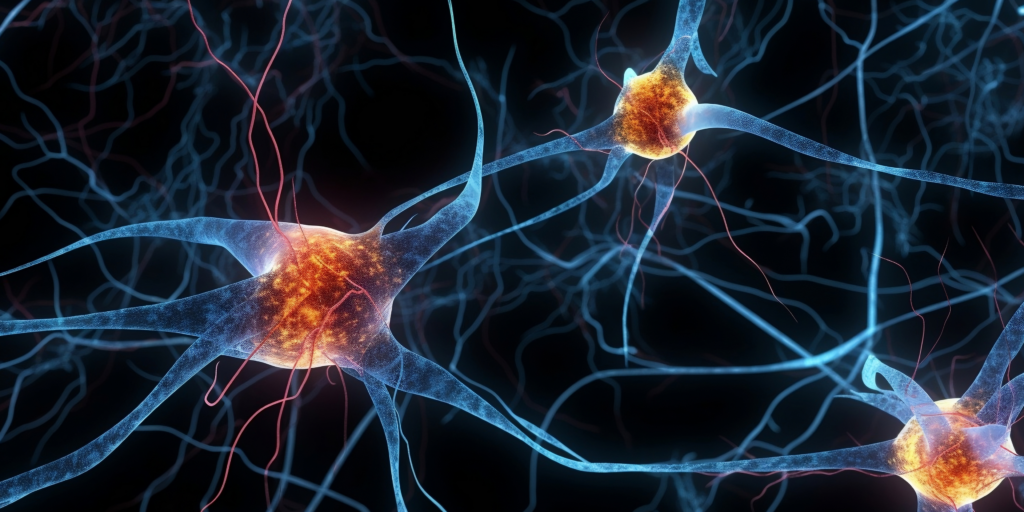
Neurodegenerative diseases such as Alzheimer’s and Parkinson’s are among the most complex challenges in modern medicine. They affect millions of people worldwide, gradually impairing memory, cognition, and movement. Despite decades of research, scientists are still working to fully understand what causes these diseases—and how to stop them.
One of the key difficulties lies in timing. As Professor Cristina Airoldi from the University of Milano-Bicocca explains: “The biochemical events at the basis of the development of these pathologies take place more or less 20–25 years before the first symptoms appear.” This means that by the time symptoms are visible, the disease process has already been underway for decades. For this reason, researchers are increasingly focusing on early molecular events—long before irreversible damage occurs.
What causes neurodegenerative diseases?
Many neurodegenerative diseases are linked to the behaviour of specific proteins in the brain. In Alzheimer’s disease, for example, proteins such as beta-amyloid can misfold and start to stick together, forming aggregates. However, not all aggregates are equally harmful. For many years, research focused on large deposits of these proteins—known as plaques. Today, scientists understand that smaller structures called oligomers are actually more dangerous.
As Airoldi explains: “Oligomers are considered the most toxic amyloid species because, as soon as they form, they can begin damaging and killing neurons. In contrast, the larger plaques found in the brain are now thought to be much less toxic.” These small, unstable protein clusters interact more easily with cells and disrupt normal brain function. Understanding how they form—and how to stop them—is now a central goal of research.
A different approach: targeting early stages
The work led by Cristina Airoldi and Alessandro Palmioli focuses precisely on these early stages. Instead of trying to treat advanced disease, their research aims to prevent or slow down the process at a molecular level.
Their approach combines chemistry, biology, and advanced analytical techniques to study how these
toxic protein structures behave and how they can be disrupted. A key idea behind their work is “that prevention could be more effective than therapy.” One promising direction they are exploring is the
use of natural compounds, such as those found in plants and food, which may interfere with harmful
protein aggregation. “Our idea is to identify the mechanism of action of molecules present in natural extracts responsible for the anti-amyloid activity” – Prof. Airoldi says. This could eventually lead to the development of nutraceuticals—products derived from food that support health and potentially help prevent disease.

The role of advanced analytical techniques
Studying amyloid oligomers is particularly challenging. Unlike many biological targets, these structures do not have a fixed shape: “In this field, we have a molecular target that is not conventional…it changes from the structural point of view, so the targeting is not trivial.”
To address this, the researchers use Nuclear Magnetic Resonance (NMR) spectroscopy, a powerful technique that allows scientists to study molecules and their interactions in detail. While magnetic resonance is commonly known from medical imaging (MRI), NMR spectroscopy is different: “When we speak about spectroscopy, we refer to the use of magnetic resonance to study molecular structures… and in particular interactions.”
Using NMR, researchers can identify which molecules bind to amyloid proteins, understand how they interact and screen large libraries of potential compounds. Importantly, this technique does not just detect molecules—it reveals how they behave and interact at a molecular level.
This kind of research cannot be done in isolation. It requires collaboration across multiple fields: “It is impossibe to perform research in a mono discipline. We absolutely need a multidisciplinary approach” – Prof. Airoldi says. Combining expertise in chemistry, biology, physics and analytical science is essential to tackle the complexity of neurodegenerative diseases.
IM@IT plays an important role in supporting this kind of research by providing access to advanced analytical techniques and expertise. For Airoldi’s group, being part of the infrastructure has enabled them to expand their capabilities and collaborations: “It is an advantage because we can obtain requests by other research groups… and we have the opportunity to extend our network and collaboration.”
The infrastructure also supports access to complementary techniques, such as atomic force microscopy (AFM), which can be used alongside NMR: “We are used to complement our structural studies also with this technique.” This reflects one of IM@IT’s key strengths: enabling researchers to combine different methods to gain a more complete understanding of complex systems.
Looking ahead
The research is continuing to expand beyond beta-amyloid proteins associated with Alzheimer’s disease. The team is now investigating other proteins involved in neurodegenerative disorders, including tau proteins and alpha-synuclein, which is associated with Parkinson’s disease. Recent work has already shown promising results: “We demonstrated that one extract – active against Alzheimer’s disease – is also effective against another target – tau proteins.”
This suggests that some natural compounds may act on multiple disease-related proteins through similar molecular mechanisms. The possibility of targeting common aggregation pathways across different neurodegenerative diseases could open new directions for prevention and treatment strategies in the future. 
A shift in perspective
Although many challenges remain, this research represents an important shift in the way scientists approach neurodegenerative diseases. Rather than focusing only on visible symptoms or late-stage damage, researchers are increasingly studying the earliest molecular events that occur decades before diagnosis. By combining advanced analytical tools such as NMR spectroscopy, interdisciplinary collaboration, and innovative approaches involving natural compounds, scientists are moving closer to understanding how these diseases begin—and potentially how they might one day be prevented.
Further information:
The full paper is available to read here: An NMR Toolkit to Probe Amyloid Oligomer Inhibition in Neurodegenerative Diseases: From Ligand Screening to Dissecting Binding Topology and Mechanisms of Action

Cristina Airoldi is Associate Professor of Organic Chemistry at the University of Milano-Bicocca. Her research focuses on molecular recognition studies using NMR spectroscopy, conformational analysis of bioactive compounds, and the design of antibacterial, antitumor, and antiamyloidogenic molecules. Her work also includes NMR-based metabolomics and research on neurodegenerative diseases using advanced analytical techniques.

Alessandro Palmioli is Associate Professor of Organic Chemistry (University of MilanoBicocca) with extensive experience in the synthesis and characterization of biomolecules forbiomedical and biotechnological applications. His research focuses on advanced analyticaland preparative techniques for the isolation of biologically active molecules, specializing inthe integration of complementary methodologies—such as HR-MS and NMR—to characterizecomplex mixtures, including natural extracts, biological fluids, and waste materials.