Pink Iguana’s ancient DNA: uncovering the past to protect the future
Researchers can trace the pink iguana’s evolutionary history — using ancient DNA facilities within the ISIS@MACH ITALIA.
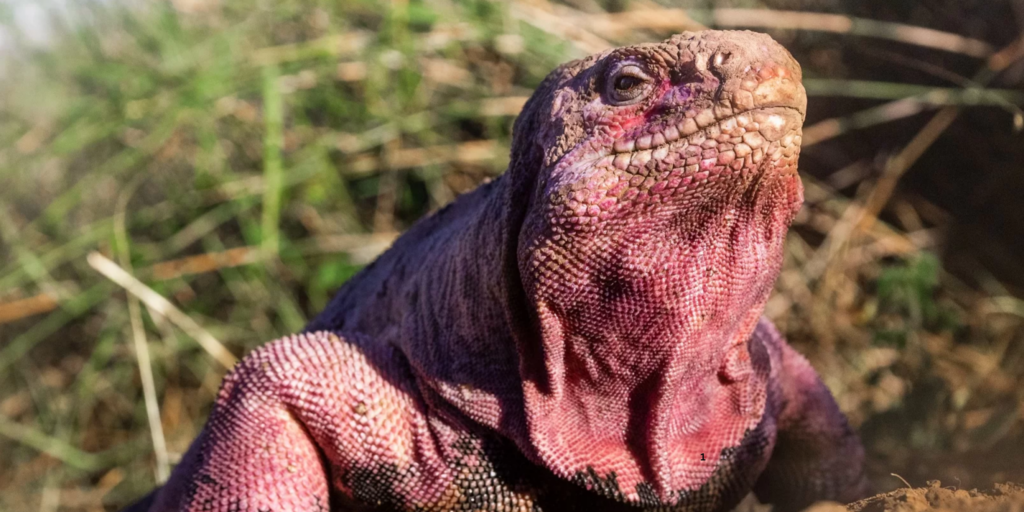
High on the slopes of Volcán Wolf in the Galápagos lives one of the rarest reptiles on Earth — a large pink land iguana that Charles Darwin himself completely missed. Today, this remarkable animal is at the centre of a research project that brings together field biology, genetics, ancient DNA, and international scientific collaboration through ISIS MACH Italia.
A rare discovery
The pink iguana (Conolophus marthae) was formally identified only in 2009, even though it lives on one of the most studied island chains in the world. Fewer than 300 individuals survive, all restricted to a small area at the top of a remote volcano. From its first description, the species has been considered critically endangered.For evolutionary biologist Gabriele Gentile, who first encountered the animal in 2006, the discovery turned into a research journey that has lasted more than two decades.
What makes this iguana pink?
Unlike flamingos or other colourful animals, the pink iguana’s colour does not come from pigments. Instead, it is caused by blood flowing through unusually shallow blood vessels in the skin. This unique biology raises important questions:
* How does the iguana cope with extreme UV radiation at the equator?
* How does it balance sunlight exposure with the need to produce vitamin D?
* Has natural selection actively shaped its unusual appearance?
Gabriele Gentile’s team has found that the pink iguana behaves differently from related species, prefers shady areas, and carries genetic traits that appear to be under ongoing evolutionary pressure. These findings help explain why the species remains distinct despite living next to other land iguanas.
A species under pressure
On Volcán Wolf, the pink iguana shares its habitat with a larger, more adaptable yellow iguana. The two species compete for space, food, and nesting sites. The yellow species is a generalist; the pink one is a specialist — making it more vulnerable to environmental change.
Biologists suspect that the pink iguana pays a physiological cost for its unusual biology, potentially impacting its growth and reproduction. Understanding these trade-offs is essential for guiding future conservation efforts.
Ancient DNA
To understand where the pink iguana came from and how populations have changed over thousands of years, scientists are now turning to ancient DNA. Across the Galápagos, natural lava tubes act as caves that preserve the bones of animals that fell in long ago.
By extracting DNA from these sub-fossilised remains — some up to 10,000 years old — researchers can: reconstruct ancient population sizes, track past migrations between islands, measure the impact of invasive species such as goats, and identify islands where iguanas once lived but are now extinct.
How ISIS@MACH ITALIA supports the research
This ambitious work is possible thanks to the ancient DNA facility at the University of Rome Tor Vergata, part of the ISIS@MACH ITALIA research infrastructure. The facility provides: a state-of-the-art clean laboratory for handling ancient samples, close collaboration between evolutionary biologists and DNA specialists, and rapid turnaround for testing ideas and processing samples.
Current research includes sequencing ancient iguana genomes and expanding the study to islands where iguanas no longer survive.
The pink iguana offers a powerful case study for all sectors interested in biodiversity, genomics, advanced analytical techniques, and environmental innovation.
Why this matters
The story of the pink iguana is more than a scientific curiosity. It illustrates how modern tools — from genomics to ancient DNA — can help protect species that are on the edge of extinction. It also shows the unique role of international research infrastructures like ISIS@MACH ITALIA in enabling high-impact, cross-disciplinary projects.
By uncovering the past, we can better shape the future — not only for the pink iguana, but for other endangered species and ecosystems around the world.
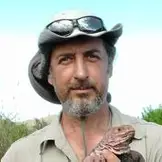
Gabriele Gentile received his PhD “with distinction” in Evolutionary Biology in 1994. From 1998 to 2003, he was at the Osborn Memorial Laboratory (Yale University). Since 2003, he has been based at the Department of Biology, University Tor Vergata. He is member of the IUCN (Iguana Specialist Group and Council Member of the Italian Society for Evolutionary Biology). He is interested in molecular phylogeny and phylogeography, molecular evolution, population genetics, conservation genetics, the ecology and evolution of underground communities, and island biogeography. Since 2003, he has been the head of an international and multidisciplinary project for the study of the evolution and conservation of land iguanas the Galapagos Islands (Ecuador) in partnership with the Galápagos National Park and in collaboration with several Italian and foreign institutions.