
DNA Sequencing NGS
General Information
Technique
Key Instrumentation
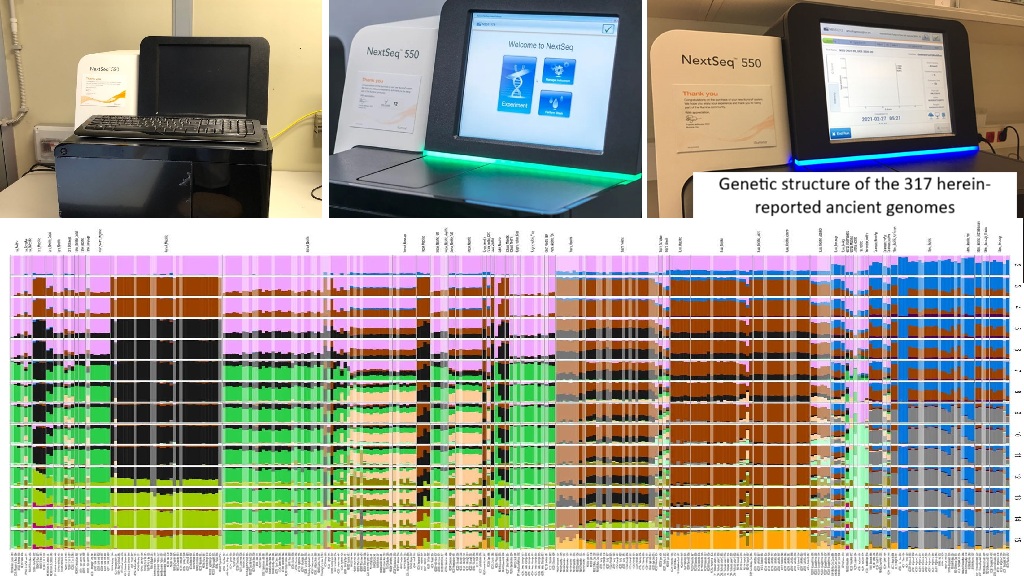
The Illumina NextSeq 550 is a versatile, high‑performance NGS platform designed to support a broad spectrum of genomic applications for research laboratories and scientific companies. Combining sequencing‑by‑synthesis chemistry with tunable throughput, it enables efficient processing of targeted panels, exomes, transcriptomes and small whole‑genome projects within a compact benchtop system. Its dual‑function architecture integrates next‑generation sequencing with microarray scanning, allowing users to perform both sequencing and genotyping workflows on a single instrument, optimizing laboratory space and operational efficiency. The system supports mid‑ and high‑output flow cells, enabling flexible configuration of read length, data yield and sample throughput according to project needs. With run times ranging from approximately 12 to 30 hours depending on the chosen kit and read configuration, the NextSeq 550 delivers rapid turnaround for time‑sensitive studies. Its 2‑channel SBS technology ensures high data accuracy, while automated, load‑and‑go reagents streamline daily operation. The platform is fully compatible with Illumina’s extensive library preparation solutions and integrates seamlessly with DRAGEN‑accelerated secondary analysis through BaseSpace Sequence Hub or local servers, providing secure, scalable data processing. This combination of speed, accuracy and workflow simplicity makes the NextSeq 550 an ideal solution for laboratories seeking a reliable, scalable instrument capable of supporting evolving research demands in genomics, transcriptomics and epigenetics.
Technical description
The NextSeq 550 System is an integrated platform that uses massively parallel sequencing technology for genetic analysis and functional genomics. Prepared libraries are loaded directly onto the system. Integrated cluster generation provides automated clonal amplification of single molecules randomly distributed on a glass surface. The DNA clusters thus obtained are sequenced on the NextSeq 550 using the Illumina sequencing-mediated synthesis (SBS) method with patented chemistry based on reversible terminators. In addition, the NextSeq 550 System combines microarray scanning with the sequencing system.
The system offers:
• scalable from 20Gb to 120Gb on a single run to support a wide range of application and studio sizes
• runs, including clustering on the instrument, in 12-30 hours
• fully automated on-instrument cluster generation to prepare libraries and upload them directly to the instrument
• the highest accuracy of any high-output benchtop sequencing system
• demonstrated SBS chemistry with single base extension makes accurate sequencing of homopolymers possible
• fully automated paired-end sequencingResearch areas and applications
Sequencing of prokaryotic and eukaryotic genomes, analysis of exomes, transcriptomes and non-coding RNA, gene expression, detection of pathogens and methylation analyses, epigenomic.
Science highlights
M. De Martino, et al. Science (2025). DOI: 10.1126/science.adt2642
M. Sikora, et.al. Nature (2025). https://doi.org/10.1038/s41586-025-09192-8
W. Barrie,* G. Scorrano*, et.al. (2024) Nature. https://doi.org/10.1038/s41586-023-06618-z
M.E. Allentoft*, et.al. Nature. (2024). https://doi.org/10.1038/s41586-023-06865-0
Experimental team
- Università di Roma Tor Vergata
- Researcher
Gabriele Scorrano

- Università di Roma Tor Vergata
- Professor

- Università di Roma Tor Vergata
- Professor

- Università di Roma Tor Vergata
- Researcher
- ISIS@MACH ITALIA