
SAXS WAXD
General Information
Unit
CNR-IPCBTechnique
Key Instrumentation
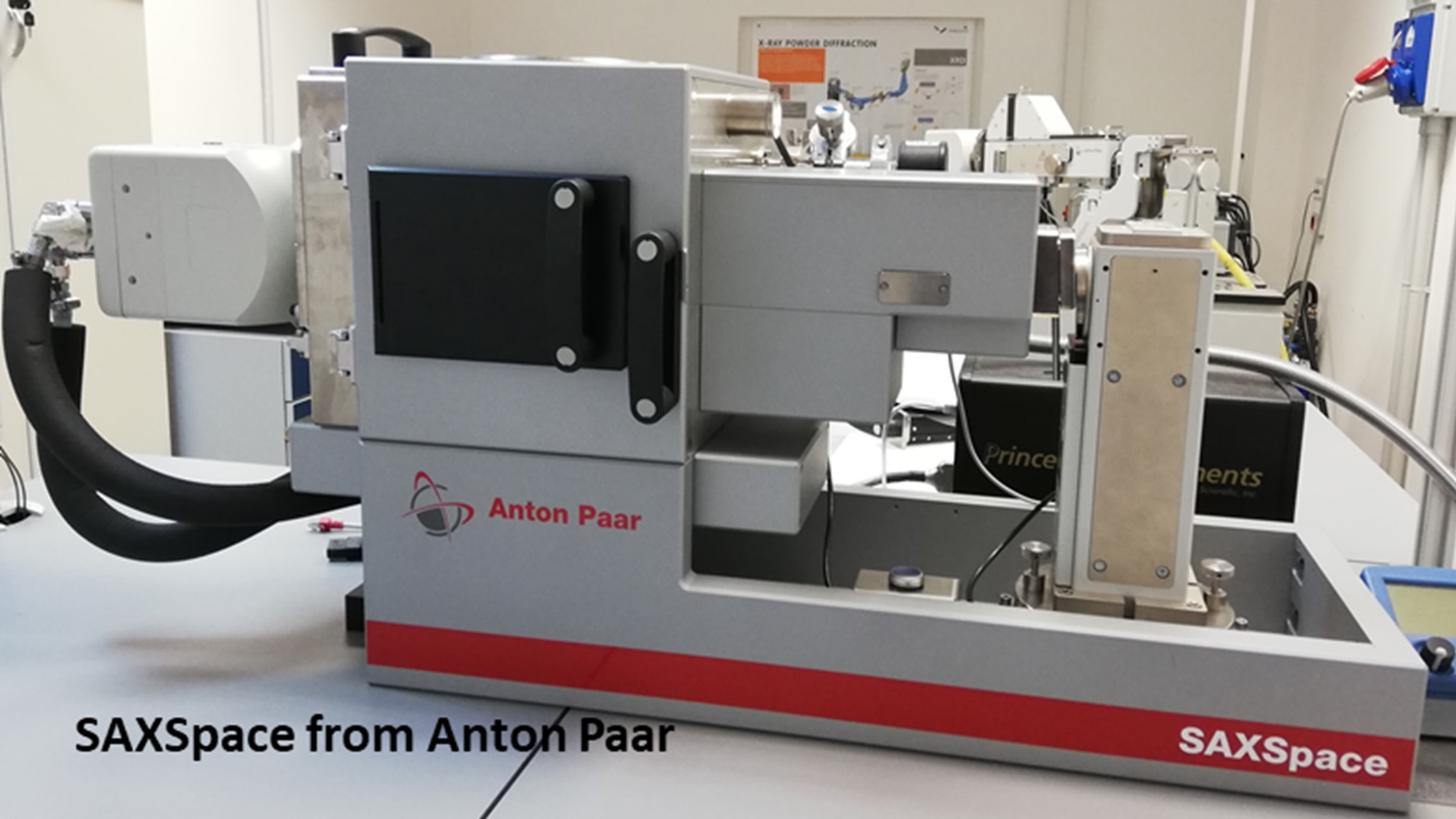
The SAXS/WAXD facility at the CNR‑IPCB unit is a versatile platform designed for the structural investigation of inorganic, organic, and hybrid materials across multiple length scales. It enables detailed analysis of crystal structures, phase domains, phase segregation, nanoscale organization, and orientation phenomena in systems ranging from polymers and soft‑matter assemblies to nanocomposites, colloids, and advanced functional materials. The instrument integrates small‑angle X‑ray scattering (SAXS) and wide‑angle X‑ray diffraction (WAXD) capabilities within a single setup, allowing simultaneous access to information on long‑range ordering, lamellar or fibrillar structures, and crystalline phases. This combined approach is particularly valuable for studying hierarchical materials, monitoring structural evolution during processing, and correlating nanoscale morphology with macroscopic properties. The system accommodates a wide variety of sample environments, including temperature‑controlled stages for non‑ambient measurements, enabling the investigation of thermally induced transitions, crystallization and melting behavior, and kinetic processes. Dedicated holders support measurements on powders, films, fibers, gels, and liquid dispersions, ensuring flexibility for both fundamental research and application‑oriented studies. High‑sensitivity detectors and optimized beam conditioning provide excellent signal quality, while automated data acquisition and analysis tools facilitate efficient workflow management. Overall, the SAXS/WAXD facility offers a powerful and comprehensive solution for researchers and industrial partners seeking quantitative insight into the structural organization of complex materials.
Technical description
The SAXS/WAXD facility at the CNR‑IPCB unit enables structural characterization of inorganic, organic, and hybrid materials across a broad range of length scales. Samples are irradiated with monochromatic X‑rays, and the scattered intensity is collected from 0° to 10° using CCD or imaging‑plate detectors, and up to 60° when operating in combined SAXS/WAXS mode. This configuration allows simultaneous investigation of nanoscale organization, crystalline domains, and phase‑segregation phenomena. The system supports measurements under controlled temperature, humidity, high pressure, and mechanical stress or strain, enabling in‑situ studies of structural evolution during processing or environmental changes. Key features include TrueFocus, which provides automatic self‑alignment with the X‑ray beam; TrueSWAXS, enabling simultaneous SWAXS acquisition up to 60° 2θ; and StageMaster, a YZ stage with automatic recognition of sample environments. The accessible q‑range spans from 0.03 nm⁻¹ to 40.7 nm⁻¹, corresponding to real‑space dimensions from 200 nm down to 0.15 nm, with a system resolution of qmin = 0.03 nm⁻¹. This wide coverage allows detailed analysis of hierarchical structures, nanomaterial orientation, and crystalline order. Overall, the facility provides a powerful and flexible platform for researchers and industrial users requiring quantitative insight into the multiscale organization of complex materials.
Research areas and applications
The SAXS WAXD facility is very useful for the structural characterization, including analysis of crystal structures, phase domains, phase-segregation studies, organization, and orientation of nanomaterials for inorganic and organic materials.
Science highlights
